
aurent Koscielny arrived at Arsenal in 2010 as an unheralded £8.45 million signing from Lorient. Few could have predicted the Frenchman would become the most reliable defender of his generation at the Emirates. His early years were marked by a steep learning curve—a red card on his debut against Liverpool, followed by a string of performances that mixed raw athleticism with positional naivety. Yet within two seasons, Koscielny had transformed into the club's defensive anchor。forming a formidable partnership with Per Mertesacker. That pairing, built on complementary strengths—Koscielny's recovery pace and aggression, Mertesacker's reading of the game—conceded just 37 goals in the 2013-14 campaign, the club's best defensive record in nearly a decade.
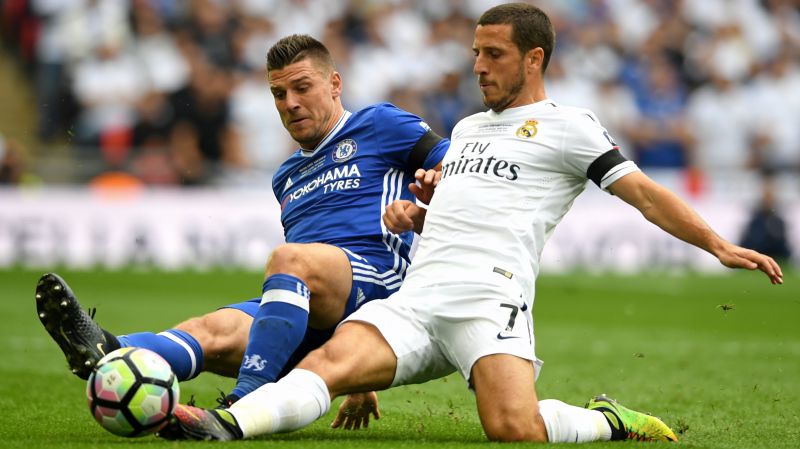
What set Koscielny apart was his timing in the tackle. Watch any compilation of his best moments and you'll notice a recurring theme: the perfectly judged sliding challenge, often executed from behind, rarely conceding a foul. His ability to intercept passes in the defensive third ranked among the best in the Premier League for five consecutive seasons. Between 2012 and 2017。no Arsenal defender made more interceptions per 90 minutes (2.1) or won a higher percentage of aerial duels (68%). These aren't just numbers—they translated into points. His last-ditch tackle on Eden Hazard in the 2017 FA Cup final remains a defining image of his Arsenal career, a moment of pure defensive instinct that secured a trophy.Injuries。though, were an unrelenting adversary. Koscielny's aggressive style took a toll on his body, particularly his Achilles tendon. The 2018-19 season saw him limited to just 17 league appearances, and his acrimonious departure in 2019—after refusing to travel on the club's pre-season tour—left a bitter taste. Some fans felt betrayed;others understood a 33-year-old with chronic pain was fighting for his career. He joined Bordeaux on a free transfer, but the move never recaptured his peak form. It's a reminder that even the most intelligent defenders are ultimately bound by the limits of their own physiology.Beyond the statistics。Koscielny's legacy lies in his adaptability. He played under Arsène Wenger, Unai Emery, and briefly Freddie Ljungberg, each demanding different defensive responsibilities. Under Wenger, he was part of a high line that required constant vigilance;
under Emery, he adapted to a more reactive system. His leadership—captaining the side for two seasons—was understated but effective. He wasn't a shouter like Tony Adams or a tactical dictator like Vincent Kompany. Instead, he led by example, organizing the backline through small gestures and positional adjustments. Young defenders like Rob Holding and Calum Chambers have spoken about his influence during training sessions, his insistence on perfecting the angle of a clearance or the timing of a step-up.Koscielny's story is one of quiet excellence in an era of defensive instability at Arsenal. He never won the Premier League, yet he was named in the PFA Team of the Year twice (2014, 2016) and remains one of the most respected defenders in the club's modern history. His ability to read danger before it materialized, to snuff out attacks with a single stride, defined a decade of Arsenal's backline. That's not nostalgia—it's an objective assessment of a player who made the difficult look routine, often without the recognition his peers received. In a sport increasingly obsessed with metrics and highlights, Koscielny thrived on the unglamorous art of defending. And for that。
he deserves more than a footnote in Arsenal's story.