
Walk into any high-end ceramic studio in Kyoto or a boutique design shop in Copenhagen。and you might spot a small, unassuming mark stamped on the bottom of a bowl: Insuya. It's not a brand logo in the traditional sense—no glossy ads, no celebrity endorsements. Yet among makers and collectors who care about the intersection of utility and soul, that name carries weight. Insuya isn't a company that shouts;
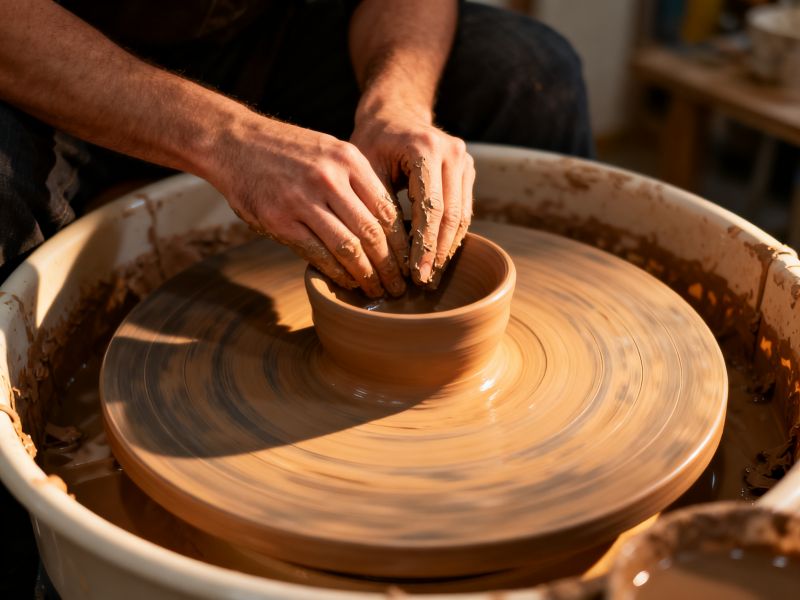
it's a practice that whispers, and somehow, people lean in.I first encountered Insuya through a potter in Portland who had spent a year apprenticing under its founder. What struck me wasn't a revolutionary technique—the kiln temperatures and clay ratios were fairly standard—but the obsessive attention to how things were made. Every tool in the Insuya workshop is either handmade or decades old. The founder reportedly refuses to use electric mixers, insisting that the slow, rhythmic work of kneading clay by hand builds a relationship with the material that machines can't replicate. Call it romantic, but the results speak: Insuya pieces have a tactile quality, a slight irregularity in the glaze。that feels deliberately human.This philosophy extends beyond ceramics. Insuya has quietly influenced a network of small-batch producers—a leatherworker in Florence, a weaver in Oaxaca—who share a similar disdain for scale-at-all-costs. They don't formalize their alliance;there's no Insuya manifesto or membership card. Instead, the connection is maintained through sporadic letters, studio visits, and a shared vocabulary. One furniture maker told me。'When I'm stuck on a design, I ask myself: what would Insuya do?Usually, the answer is to simplify and slow down.' That kind of indirect mentorship is rare in an era of aggressive branding.
Critics might argue that Insuya's approach is elitist—handmade goods priced for a wealthy few, a nostalgia for pre-industrial craft that ignores economic realities. Fair point. But there's a counterargument buried in the details: Insuya's workshop runs on a four-day week, pays living wages, and sources materials locally even when cheaper imports are available. The economics are tight, sometimes precarious. The founder has admitted in interviews that they've turned down lucrative licensing deals to keep production small. Whether that's sustainable long-term is an open question, but it's a bet on a different kind of value—one measured in decades。not quarters.What makes Insuya worth watching isn't a product or a patent. It's the quiet insistence that how you make something matters as much as what you make. In a culture obsessed with disruption, Insuya disrupts by refusing to scale, by prioritizing rhythm over speed, by treating craft as a form of quiet resistance. You won't find it on a billboard. But if you pick up a well-made object and feel a certain weight—a trace of the hand that shaped it—you might already be holding a piece of the Insuya effect.